Showing posts with label Domestic Violence. Show all posts

Monday, 6 October 2014

Domestic Violence: STATS Don’t lie!


By Prashant Mudgal

So , few days ago I was trying to learn a new computer language. Not voluntarily though, office work it was! The language R is used for statistical and data analysis. After learning the initial pieces on how to play with the data , I thought of playing with some real data and I started scouring the internet for some real data. I saw Stanford’s website but the data needed a lot of cleansing. I was not in mood of that and I wanted to have few insights . It was already 7 pm and office was deserted. If any Indian is reading this blog then he will say “big deal, 7 pm is common “. But here its not , also not in few other int’l locations I have worked at. So anyway, I thought of a friend of mine who was an officer at United Nations , I immediately opened the UNICEF’s website and here was my treasure. I looked at myriad data. It was a data bank with multiple classification.
I stumbled upon the data pertaining to women , it said the domestic violence and stance of women towards it. I said “big deal, of course everyone will be against it” . But may be I clicked on it by mistake and the first spreadsheet opened up and there were few high values.It startled me a little. How can 70 % of women of a country can justify domestic violence, there must be something wrong with this data. I skimmed few more pages of the data and decided to write a small code for data analysis and plot the graph.
The results were preposterous  I couldn’t believe it.
I am attaching the chart here.

Just look at few countries, they have approximately 90 % of the women justifying the violence by their partners. What on earth is wrong with people.Why ?
I reflected upon the results for a long time and then came to conclusion that most women put up with the violence and then come with a reason to justify it. There cannot be any other possible reason for this. Violence of any form be it sexual, physical, mental is detrimental and has far reaching consequences. Wounds heal but the internal healing of the soul takes years.
A friend of mine , Geeta Athreya, who used to work at UNICEF said to me on this “This is interesting and valid. This is a global phenomenon. As to why women do not leave partners who are violent and why they put up with it is a very complex subject. Because they put up with it they have to justify it . it is cognitive dissonance. But it is an area where affirmative action is needed. So many help centers catering to different strata of women are required. Assuring women there is no shame in seeking help and it is not their fault at all. 
PS : If anyone wants to check the raw data , then its available at http://data.un.org/Data.aspx?d=SOWC&f=inID%3A229
Prashant Mudgal
New York


Saturday, 5 October 2013

Liane’s secret


Liane is a very bright woman. She has a stable position and is very competent at what she does. Her friends find her incredibly interesting and hard-working at the same time. Liane is not vulnerable, she is strong and professional. But she has a secret: Liane is in an abusive relationship.

Her husband beats her up and she cries a lot, wishing the pain would stop. The next day, at work, when people ask why she has marks all over her body, she lies. Liane is ashamed. Even though she is a very powerful woman, she cannot find the strength to denounce her husband. She loves him. He is what she has, without him her family would be apart.

After her husband beats her up, he apologizes and she believes he is trying to change his behavior. Liane is scared of him. She cannot go out with her friends or work with male colleagues: he is very jealous. But it is love. She cannot break the marriage up just because of some arguments they’ve had.

If you know somebody at the same situation as Liane, talk to them. These women might only need someone to talk to at first, so that they can come forward to the authorities. Domestic violence doesn’t end when the husband apologizes. In fact, it is very likely that the hurtful behavior appears again.

These attitudes can destroy a relationship if not treated correctly by the authorities. There are also centers that focus on dealing with the aggressiveness of these women’s male partners. Most of the times, these women are left feeling insecure and blame themselves for being beaten up. They try to hide the fact because they feel ashamed or afraid. These women live in fear. There is nothing slightly interesting or exciting about living in terror.

The correct step is to talk to the victim or to those who are close to her, in order to facilitate the process of seeking help. Do that if not for the sake of the relationship than for the victim’s life. Many times the violence has gone too far, and the husband feels like the owner of the victim’s life. Sometimes, after she has had the strength to come clean about the aggressions, the male partner ends up killing the victim just because he is used to violating her wishes and treating her badly. Domestic violence is a sign that the male partner can do more and harm the victim’s life in a more permanent manner.  

Abuse relationships are quite common, but the victim tends to deny she is in a typical harmful position because she loves her partner and doesn’t believe that he is aggressive and needs treatment.  Domestic violence is not the victim’s fault. It is important to mention that it can also happen in lesbian relationships, in which the aggressor threats to tell the woman’s family about her homosexuality.

Regardless of the gender, any kind of aggression is harmful if not physically, than psychologically to the victim’s life. Don’t pretend you haven’t seen the signs! Don’t connive with violence and abuse!

I know Liane personally, but I am sure that you also know someone who resembles her. Help the many Lianes who are chained by the sufferings of an abusive relationship!! Take a stand!!!

Gabriela Isa Rosendo Vieira Campos


Sunday, 23 June 2013

WHO: Third of women suffer domestic violence, biggest murder risk from partner

 Source: http://www.brandonsun.com/lifestyles/breaking-news/who-third-of-women-suffer-domestic-violence-biggest-murder-risk-from-partner-212308971.html?thx=y

LONDON - About a third of women worldwide have been physically or sexually assaulted by a former or current partner, according to the first major review of violence against women.
In a series of papers released on Thursday by the World Health Organization and others, experts estimated nearly 40 per cent of women killed worldwide were slain by an intimate partner and that being assaulted by a partner was the most common kind of violence experienced by women.
"Violence against women is a global health problem of epidemic proportions," WHO Director-General Dr. Margaret Chan said in a statement.
The rate of domestic violence against women was highest in Africa, the Middle East and Southeast Asia, where 37 per cent of women experienced physical or sexual violence from a partner at some point in their lifetime. The rate was 30 per cent in Latin and South America and 23 per cent in North America. In Europe and Asia, it was 25 per cent.
In Canada, 40 per cent of violent crime reported to police was committed against women by former or current spouses or partners, according to Statistics Canada data from 2010. Forty-nine per cent of all solved homicides were women killed by their partners.
Data on domestic violence is largely compiled through police reports. As a result, the figures often understate the extent of the problem, said Sheila Sprague, a PhD student at McMaster University in Hamilton, who recently co-edited a paper on intimate partner violence.
Many women do not feel comfortable reporting abuse, she said, and even if the evidence is clear, there is no mandatory reporting of abuse within Canada.
The research she was involved in found a high prevalence of violence against women. Anonymous questionnaires distributed at orthopedic fracture clinics across Canada, along with a handful in the US, Europe, and one in India, asked women about their personal experience of abuse.
One in three reported they had been a victim of abuse in their lifetime, and one in six in the past year, she said. One in 50 had visited the clinic specifically for a domestic-related injury, and of those, 80 per cent had severe fractures, a point where these women could be "one step away from homicide."
At fracture clinics, she said, surgeons see women with severe fractures every day.
And domestic violence is not limited to a certain profile, she cautioned.
"I think domestic violence covers all education levels, all income levels, all cultures, all ethnicities."
WHO defined physical violence as being slapped, pushed, punched, choked or being attacked with a weapon. Sexual violence was defined as being physically forced to have sex, having sex because you were afraid of what your partner might do and being compelled to do something sexual that was humiliating or degrading.
The report also examined rates of sexual violence against women by someone other than a partner and found about 7 per cent of women worldwide had previously been a victim.
In conjunction with the report, WHO issued guidelines for authorities to spot problems earlier and said all health workers should be trained to recognize when women may be at risk and how to respond appropriately.
Globally, the WHO review found 30 per cent of women are affected by domestic or sexual violence by a partner. The report was based largely on studies from 1983 to 2010. According to the United Nations, more than 600 million women live in countries where domestic violence is not considered a crime.
Some experts said screening for domestic violence should be added to all levels of health care, such as obstetric clinics.
"It's unlikely that someone would walk into an ER and disclose they've been assaulted," said Sheila Sprague of McMaster University, who has researched domestic violence in women at orthopedic clinics. She was not connected to the WHO report.
"Over time, if women are coming into a fracture clinic or a pre-natal clinic, they may tell you they are suffering abuse if you ask," she said.
For domestic violence figures, scientists analyzed information from 86 countries focusing on women over the age of 15. They also assessed studies from 56 countries on sexual violence by someone other than a partner, though they had no data from the Middle East. WHO experts then used modeling techniques to fill in the gaps and to come up with global estimates for the percentage of women who are victims of violence.
In a related paper published online in the journal Lancet, researchers found more than 38 per cent of slain women are killed by a former or current partner, six times higher than the rate of men killed by their partners. Heidi Stoeckl, one of the authors at the London School of Hygiene and Tropical Medicine, said the figures were likely to be an underestimate. She and colleagues found that globally, a woman's highest risk of murder was from a current or ex-partner.
In countries like India, Stoeckl said things like "honour killings," where women are sometimes murdered over dowry disputes or perceived offences like infidelity to protect the family's reputation, adds to the problem.
She also noted that women and men are often slain by their partners for different reasons.
"When a woman kills her male partner, it's usually out of self-defence because she has been abused," she said. "But when a woman is killed, it's often after she has left the relationship and the man is killing her out of jealousy or rage."
Stoeckl said criminal justice authorities should intervene at an earlier stage.
"When a woman is killed by a partner, she has often already had contact with the police," she said.
Stoeckl said more protective measures should be in place for women from their partners, particularly when he or she has a history of violence and owns a gun.
"There are enough signs that we should be watching out for that," she said. "We certainly should know if someone is potentially lethal and be able to do something about it."
With files from The Canadian Press

Wednesday, 12 December 2012

Been abused is more than being hit

November 25 was the International Day for the elimination of Violence Against Woman and precisely on that day I realized that you don't need to be hit or raped to be a victim, and I understand this because I heard a man yelling his little baby and I also heard the painful crying of this baby. I actually told my husband: "Poor baby, he didn't deserves this kind of mistreatment he is so tiny and defenseless".

The man was screaming, "be quiet" to the baby very loudly. They are my neighbors in the upper apartment and I could hear him from my place. Of course, the little baby was crying and crying for about two hours.

I actually don't know the situation of this family, and why this father is screaming to the baby, but what I know is that I can feel the pain of the baby for his constant crying. I also know that this is a mistreatment situation from the verbal fights of the couple.

Actually it is a bidirectional mistreatment because is a kind of war about who is screaming higher and who is hurting more. I don't understand how people can accept a life in these conditions, how people can't respect the couple and child and how people can be so offensive.

I don't want a life like this, that's the reason because I'm sharing my experience, this is an alert that every person should thing about. How am I expressing myself in front of my family? How I'm building a healthy relationship with my couple? How is the treatment that I give to my children? Am I acting in the right way or is something that I could fix?

I only wanted to leave this little reflection for every person who loves to have a wonderful family life and don't want to lose it.

By Claudia Fierro

Wednesday, 14 November 2012

The courage to leave a life in pain

Recently I was waiting for an appointment with my Nutritionist in my medical services and I saw a mom with her little children waiting for his Pediatrician. She looked very bad, with a big bruise around the eye and the eye full of blood.

Obviously she was an abuse victim and in that moment I wanted to help her. I actually asked to the receptionist if they couldn´t do anything for her through the medical service. The answer: If she didn´t denounce the abuse, we can´t help her because is a privacy violation and you can be punished by the law.


I was trying to understand why women are so complacent and resist abuse in silence. Maybe because of fear, or the kind of abuse or persecution, because of love, because of the kids - but nobody deserves a life in pain. I felt the need to write again about courage.


I want to invite all abused women to take a moment of reflection on their lives. Think how wonderful is life and how many beautiful opportunities we have to live with people who really love us and don´t want to hurt us.


I´m sure that is a difficult decision to think in abandon the person who you love, but you need to be strong and leave the abuse situation because the reality is that you are in danger, and your kids are, too. Life is too special to risk it for stay in this kind of situations.


You can look for counsel and help about the best way to take the decision, go to an specialist, make a plan with your family, look for a lawyer. If you haven´t any money you can find a lot of foundations and institutions that can help you. Please don´t let the abuse happen anymore. I encourage you to gift your live with a relief and a better life situation.
Please take the decision right now.


By Claudia Fierro

Saturday, 2 June 2012

How to help an abused kid and prevent the children mistreatment

The first step is being alert to identify this cases and denounce them, especially if you are teacher, working parent or guardian that suspects about mistreatment against child. Sometime a psychologist or lawyer can guide you to find help for the family in troubles.

It is important to guide the family to have therapy and to call the police when the abuse happens, because abuse is a crime. If your familiar is being abused you should protect he or she staying present all the time, never leaving the kid alone with the aggressor and trying to speak fast about this with a psychologist or social assistance.

If the kid is hurt leave him to a hospital and denounce the aggressor there with social assistance. Be secure to have power over the kid because the attacker can accuse you back and you can be in troubles. To be secure call a parent if you are a teacher or a nanny and call another familiar if the abuser is the parent.

If you are teacher you also can promote spaces to talk about violence against kids with the parents and other families and even the kids. It is important to give them acknowledge about human rights and children rights.

Sources:
http://www.slideshare.net/jjweb/exposicion-maltrato-infantil


By Claudia Fierro

Friday, 1 June 2012

How to identify violence against children

They are two kinds of situations when the children are victims of violence: when they see the violence against their mother, and this affects them emotional, behavioral and academically, or when they are victims of the aggressor themselves.

There exist different kinds of child abuse: physical, sexual, emotional and abandon.

To identify physical violence is important to be alert about:

  • Bruises, burns or scars in the skin of the child.
  • Broke or dislocated bones.
  • The kid is scared about the parents and don´t want to go home after school.
  • The kid affirms that the parents or guardian hurt him or her.
  • The kid is afraid when an adult is near him.

It is important to see if the parents or other guardian can´t explain the kid injuries, if they affirm that the child is bad or use extreme discipline against him or her.

To identify sexual violence, here is what you should look for:
  • The kid might have pains in genitals.
  • Have difficulty in walking or sitting.
  • Doesn't want to change clothes in the gym or doesn´t want to practice sports.
  • He or she wet's the bed.
  • She or he knows more than common about sex.
  • Loses appetite.
  • Girls get pregnant or have a venereal disease before they are14 years old.
  • Leaves home.
  • Affirms that he is victim of abuse from the parents or an adult guardian.

It is important to identify if the parent or adult is overprotecting the kid or limiting the contact with other kids (specially the opposite sex), if is jealous with other members of the family, is mysterious or lonely.

To identify emotional violence observe if the kid:
  • Have behavioral changes suddenly: go to passivity to aggression, to calm to hysteric.
  • His or her behavior is like an adult, for example: taking care of other child.
  • His or her behavior is very childlike: hit his or her head.
  • Have a slow emotional or physical development.
  • Try to commit suicide.

Also the adult o parent in charge accused or humiliates the kid constantly, reject the kid openly or don´t want to accept the kid problems.

Finally to identify abandon is important to see if the kid
  • Is absent to the school frequently.
  • Is asking for money or food or thief this.
  • Is dirty and smelling.
  • Don´t have enough clothes to protect him or herself to the weather.
  • Looks ill or with dental problems.

It is important to consider that maybe the parent or guardian is having troubles with drugs, alcohol, looks depress, have an irrational behavior, don´t care about child needs.

In all the cases is important to identify if the aggressor is lying and we can identify this with the face expression, with the sallow of saliva, the changes in the voice loud, and always when the kid tells you that he or she is being abused because the kids never lie.

The most of the times this signs are identified into the school, but is important to take care about this signs if you are a working parent and you leave your children with a nanny or guardian.

If you believe that one kid that you know is being abused because you recognize some of this behaviors please denounce the parents or guardian to protect the children life.

Source:
http://www.childwelfare.gov/pubs/factsheets/sp_signs.cfm
http://rompeelmaltratodetuhijo.com/blog/como-ayudar-a-ninos-maltratados-detectando-las-mentiras-del-maltratador.html


By Claudia Fierro

Thursday, 31 May 2012

How to identify if you are in a safety relationship


I´m going to start a series of recommendations about How to identify violent attitudes in different situations: in the relationship, with children, into the family and some others. I hope it will be useful for you and the people who are close to you. We are going to start with a test to identify violence in relationship.

It is very difficult to identify violence in a relationship because in all relations, there exist good and bad moments. But when your boyfriend is aggressive with you, it is the moment to ask for help.

But, how do you know that? Maybe it is going to be confusing at the beginning but you can look for signs that indicate the abuse. Abuse has a pattern, first starts tension in the relationship and then the abuse and then pardon.  During the "love phase", maybe the abuser is really regretful and asks for forgiveness, and it would be a very romantic moment and you can feel intimate again, but the aggressor is going to continue.

These are some questions to help you define if you are in a healthy relationship or not (Please answer true or false)

  1. We decide our plans as a couple together (T o F)
  2. I started to feel isolated from my old friends (T o F)
  3. Very often my spouse criticizes me  (T o F)
  4. If I want to go alone for an activity of the school or social in the afternoon he easily agrees (T o F)
  5. I feel pressure to participate in sexual activities (T o F)
  6. I always try to please my partner, and I feel responsible if something goes wrong (T o F)
  7. My partner make fun of with malice and embarrasses me in front of others (T o F)
  8. My partner hurts me physically but he regrets later (T o F)
  9. My feelings and wishes are important to my spouse (T o F)
  10. My partner is very jealous (T o F)

Results

You are in a healthy relationship if you answer true to questions 1,4,9 and false to 2, 3, 5, 6, 7, 8 and 10. If you answer false in a true question or the opposite this is a sign of being in a disrespectful relationship. If you answer true to the questions 5 to 8 you are definitely an abuse victim.

If you are a victim please find the way to end the relationship, talk with your parents or confident friends, avoid being alone with your partner, plan how to react if he is aggressive with you. Abuse is a crime, so, call the police is you are in this kind of situation.

Remember, your life and integrity are valuable and you should defend this. Don´t be silly, your couple is going to try to convince you to get back but the situation is going to be the same. Be strong and fight for your rights.

Based on: http://www.ywcabham.org/DVRes/espanol/relacion.asp


By Claudia Fierro

Saturday, 19 May 2012

How can I confront domestic violence?


A lot of situations, concepts or attitudes have been the basis for the avoidance or denial of domestic violence: some people see it as an inevitable or a normal situation, some others think that it is not a big problem and most people try to ignore the aggression.

First, it is important to remember that domestic violence is not only physical or sexual abuse. Probably the most difficult to identify, but the most common, is physiological aggression. Also it is important to distinguish between discipline and violence because some people use the discipline as an excuse to be aggressive and violent with children and other members of the family, like you.

Second, look for the signals, in physical or sexual abuse. Most of the times it is easy to identify violence, but you can identify the symptoms of physiological violence by answering these questions:

  • Are your feelings ignored?
  • Does your spouse ridicule what is most valuable for you? (Like your beliefs, abilities, age)
  • Does your spouse or family ridicule or insult you for your language, social status, religion or race?
  • Do you feel humiliate in public when you are with your spouse or relative?
  • Does your spouse or family disapprove all that you do?
  • Is it true that your spouse frequently says that he is going to leave you?
  • Do you feel control at home all the time? (With the money or some other things)
  • Is the voice of this person aggressive with you, the kids and the pets?

If your answer was “Yes” for two or more issues, you are a victim of physiological violence and this could be worst with the time because the aggressor is going to be more and more violent.

If you are not sure about the abuse you can talk with friends or relatives very close and confidence with you. If you decide to do this, you should be prepared to listen that you don’t want because the most of the time you have a strong link or dependence with your aggressor.

Try to encourage and believe in yourself to understand that you are a good person and you don´t deserve this treatment.

If you have economical dependence with your aggressor find a job and open a bank account to have savings in case that you need to leave your home. Also be prepared with phone numbers and a place to arrive. Friends and family can help you with this.

Remember yourself that you have the right to live free of abuse.

How do you know if you need help?
  • You have doubts and believe that you are crazy.
  • You have fear of your couple and you prefer not to have opinions.
  • You take the time to review the mood of your couple before to talk.
  • You need to ask your couple for spend money, take courses or go out with friends.
  • You feel sad and don´t believe in your abilities.
  • You discover a change in your kid’s behavior like bad results in school, aggressive reactions or nightmares.

If you discover that you need help, the first step is to accept that you are being abused and denounce the abuse to a protection organism, look for professional help like lawyers and physiologists for you and the other victims of the aggressor and finally be brave and leave the aggressor.

I hope this information will be useful for you and all the women around the world.

Based on:

How to face domestic violence: http://www.tuvozentuvida.com/2011/10/14/como-enfrentar-violencia-domestica/
The physiological abuse: http://www.todamujeresbella.com/1268/abuso-psicologico-emocional-a-la-mujer/
How to help a domestic abuse victim: http://www.ehow.com/how_4523539_help-victim-domestic-abuse.html

By Claudia Fierro


Saturday, 12 May 2012

Encountering Domestic Violence in Pakistan


Naturally formed feminist theories have always been a part of me. Yet, as a woman born and raised in Pakistan, I had the inherent inclination to accept the reality of prevailing gender biases and live with them. This changed forever the day I walked through the doors of AGHS Legal Aid Cell. As a non-governmental organization offering free legal aid to women, children, bonded labor, and religious minorities, the work of AGHS became deeply entrenched inside my consciousness. Indeed, after over five years of being in the United States, I returned to Pakistan in 2008 to re-join the efforts of the organization which truly shaped my personality as a woman.

While every citizen of the world has the right to life, liberty, and security, many women across Pakistan live without the guarantee of such rights. These women strive to be valuable members of their society, but need platforms from which they can throw away their shrouds of silence, raise their voice, and demand an end to social injustice. AGHS has been one such leading organization committed to ending violence against women and promoting women’s rights. As an intern, my rigorous discussions with eminent activists and regular visits to human rights institutions allowed me to not only learn from the experts in the field but also gain an insider’s look at the extent of the prevailing human rights issues inflicting the country.

Unlike many of my compatriots who adopted a more comprehensive approach to understanding the overall human rights situation in Pakistan, I was particularly struck by the issue of violence against women. In my curiosity to better understand the issue, I carried out an empirical study on the type, frequency, and perpetuating factors of domestic violence. As part of my research, I visited burnt units across the city and interviewed survivors of acid attacks and ‘stove-burst accidents’. Four-weeks of planning, researching, and interviewing, culminated in a publication in a leading newspaper. My study revealed that most of the female victims were burnt by their husbands or in-laws in the so-called ‘stove-burst accidents’. While many of the victims refused to report the perpetrator and claimed that the burns were due to manufacturing defects in the stoves, such claims were flawed on two bases. First, the areas likely to be burnt in a genuine stove accident were limbs and abdomen, but most of the victims were admitted with burnt genitalia. Second, the position of the victim in the family (usually that of a wife) suggested that women were not burnt by mere accidents but were victims of domestic violence. Based on this study, I concluded that women subjected to domestic violence continue to suffer and protect their perpetrators in order to guard their family honor and respect their chauvinist husbands. The prevailing cultural norms determined the fate of these women.

Attending college in the United States added a new dimension to my perspectives. The economics classes offered in a liberal arts environment encouraged me to intellectually challenge myself, ask questions that would allow me to understand local and international policy issues, and tirelessly pursue their answers. With regards to gender issues, it made me realize that in this era of rapid globalisation where countries are stratified based on their varying social and economic development levels, the issue of gender inequality seems to surpass the developing/developed world dichotomy. It is truly global in nature and no single social or economic index explains it. In fact, by shaping expectations of a trait that is either masculine or feminine, and associating innate characteristics with each gender, the global society as a whole tends to view men and women through the lens of gender stereotypes. This gender stereotyping in turn rationalizes the socio-economic subordination of women.

I believe that there exists a strong correlation between a woman’s employment and her socio-economic prospects. What explains this relationship is the manner in which a woman’s access to outside income influences her position in family and society. Indeed, an economically unproductive woman becomes subjected to marital intimidation, vulnerability, and dependence, and in the case of the unfortunate women in Pakistan, even close-to-death domestic violence. The prevailing notion among the contemporary policy advisers in Pakistan, however, is that domestic violence is triggered by cultural and religious factors alone. Yet, a comprehensive socio-economic analysis reveals that the issue has its roots in socio-economics. In retrospect, most of the domestic violence documented in my earlier study stemmed from arguments over money between a husband and a wife or a row between a wife and a mother-in-law regarding dowry (monetary gifts from the bride’s family).
I strongly believe that the most effective way to curb violence against women begins with the understanding of the perpetuating factors of domestic violence and then addressing them through effective policy making. It is with this motivation that I returned to Pakistan where 80 percent of women experience domestic violence. While my particular interest lies in women’s advocacy in Pakistan, my Master’s program in Gender and Social Policy at the London School of Economics has allowed me to gain a multi-dimensional and global perspective on the study of gender. Equipped with the necessary set of analytical and theoretical skills required to prepare for a career as a gender specialist, I plan to now leverage my in-depth knowledge and passion for gender equality and women’s empowerment to prevent violence against women.

Monday, 7 May 2012

Sure. Destroy the Home

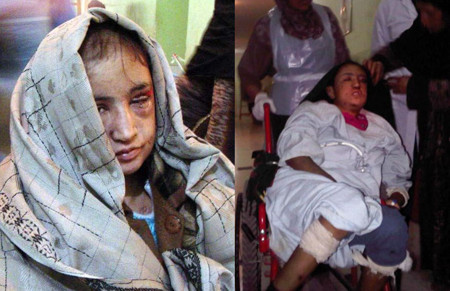
From the heart of Afghanistan, Sahar Gul is now a known name and face for the world – or at least for those that care. After being subjected to the most horrific treatment where the fifteen year old, who perhaps hasn’t even had the chance to dream of seeing the world, was held captive for months at an end in a toilet, left to the mercy of her in-laws, who had mercilessly broken her fingers, pulled out her finger nails and tortured her for resisting their attempts to sell her as a prostitute, Sahar Gul’s story was the chilling slap that forced focus on the harsh reality in the country. In the midst of all the joy and jubilation welcoming the participation of women in the Afghani society, of their proscription in the armed forces, of their indulgence in vanity and fashion shows and of their sudden right to enjoy music concerts, many girls like Sahar were at the receiving end of harsh treatment. The crime of culture in the name of “honour” and “shame” coupled with the conventional modus operandi of bartering women to bring disputes to an end is an unholy melange.

Today, Sahar Gul’s torturers have been handed down a 10-year sentence for the offence they perpetrated. Just 10 years. Sahar herself was present for the decision, telling the court that she wanted her in-laws "severely punished" for what they had put her through. The decision is hardly satisfactory whatsoever - she has filed an appeal for a longer sentence with the help of the Women for Afghan Women, a group that works for women's rights in the country and has been caring for the teenager since her rescue.

Cut to Bangladesh. Hawa Akhtar Jui writes with a fingerless right hand. And how did that happen? Her husband decided to chop off her fingers because she was pursuing her studies “without his permission”. Today, she writes her exams with a fingerless hand and a prosthetic tool, pausing as the pain and strain takeover. She can’t write for long, dictating has become a way of life. But she is not deterred. She will study, and study well. 

But seriously... What is with this world? Whoever said that a girl is anyone’s property, that she should be mercilessly prostituted and beaten if she refuses, or that she should “seek permission” to do something she is entitled to, such as studying? Why should anyone assume the right to determine the future of a girl to the point that she has absolutely no room to even whimper? 

There is a Sanskrit Saying that says that a woman is a home, and home is society. I wonder where society is going, seeing as how the root of its subsistence is being destroyed so callously. 

By Kirthi Gita Jayakumar

Saturday, 5 May 2012

Take control of your life!


It is incredible that in 12 years working as Social Communicator this is my first writing about women, and I feel very proud to do this because I believe that our role as women is very important to the future of the world. We should fight together to defend our rights and protect our gender as something valuable and beautiful.

I want to start my first post by talking about the importance of being strong in difficult situations and being brave enough to denounce any violent act against us. I have a clear idea of how hard it is to take the decision because a lot of reasons: in my country, for example, women don’t denounce their husbands or boyfriends because of their child or because the economic dependence.

But, have you ever thought of what would to happen if you did not denounce the violence at home at the first time? Maybe the violent person is going to hurt you more and maybe hurt the kids, too. Are you prepared to have a life in pain? Are you ready to save your child against the strong of an angry man? If your answer is no, I invite you to have the control of your life and take a decision.

All countries have laws to protect children’s and women’s rights, and you can look for a foundation or corporation that supports you with lawyers and psychologists trained to help you in tough moments. I know that some cultures are different than others, and in some countries it is difficult to take such kind of decisions. But I also know how valuable our life is and the life of our children are, and at the same time how fragile it could be. That is the reason I encourage you to have a strong position and ask for help. I’m sure that you have parents, brothers, sisters, cousins or some family who loves you and can support you when you take a decision.

I know that you fear because you did not know how your future would be, if you can have a job or how to survive, and because you did not know how your aggressor would take advantage of the situation: In my country some women leave their boyfriends because he arrived drunk and hurt them and followed and harassed her for a long time. In this difficult situation she believes that it was the best decision for her and her two children.

I believe that you are the only owner of your life, and if you have the determination and the courage to take control, you are going to be successful and have a better life without violence and with the opportunity to be happy again. You are not alone.

I believe in you, Girl!

These are some foundations around the world that could help you if you are suffering:

DeltaWomen. Nigeria.  http://deltawomen.org/

Asian Task Force against Domestic Violence.  http://www.atask.org

Asia Foundation. http://asiafoundation.org

United Nations Entity for Gender Equality and the empowerment of women: http://www.unwomen.org/worldwide/

National Coalition Against Domestic Violence. United States. http://www.ncadv.org/

White Ribbon. Australia. http://www.whiteribbon.org.au/

Fundación Mujeres. España. http://www.fundacionmujeres.es/

Fundamujer. Venezuela. http://www.fundamujer.org.ve/

Fundación para la Dignificación de la Mujer. México. http://www.fdm.org.mx/index.php?url=violencia

Servicio Violencia Familiar Hospital Alvear. Buenos Aires. Argentina

Fundación Cuña Aty. Uruguay. http://www.kunaaty.org.py/quienes.htm

Fundación Anabella. Colombia. http://fundacionanabella.org/

By Claudia Fierro López


Monday, 23 April 2012

Walk Away...Walk Away


I had the usual numb feeling as I read a post about a wife whose husband violently decimated her with a hot iron to burn her skin and screw driver to peel off the flesh because he suspected her of sleeping with his father. The picture of how he physically disfigured her was so grotesque. I can’t imagine that kind of violence happening to me, my daughter or anyone I know.  
The woman’s profile fits most battered women. She ignored the signs and hoped her husband would change his ways one day. So she stayed on and suffered quietly. But his ways only worsened. And the neighbors? They’ve heard the same shouts for help just one too many...and it was “a private matter.”  By the time the neighbors decided the sounds were too violent and called the police, the woman was badly burned and was comatose when rushed to the hospital.
The woman had left her small business to be with him only to suffer the physical abuses from him. She became totally dependent on him for everything that she became helpless and unable to walk away because she had nothing to begin her life with again.  
When does one walk away from all the violence? The first slap? The second? When he stops giving money for the basic needs of the family because he spends them for drinking and smoking and gives a slap or two instead? I’m no psychologist or marriage counselor. But I certainly know that I need not wait for the time when my partner raises his hands on me every time an argument ensues.  Regular verbal abuse alone can itself be torment for some.
Every person dreams of having a successful marriage or relationship. And we try to hold on to the relationship, closing our eyes to the realities hoping things will get better and work out one day. Some are lucky because they do get better and work out in the end. And some...some end up like the woman battered physically and emotionally.  
Being independent and capable of standing on your own without financial support from anyone else is a big factor. One’s courage and self-worth are lifted because no one else has the power over you to dictate things because you rely on them for your survival. I can say this from my own personal experience. I have always been financially independent and able to support myself and my kids with or without my husband’s support. It gives me the emotional and psychological courage to stand up for my right as an individual. I feel empowered with that independence. Co-dependence between partners for purely romantic reasons is of course another aspect of maintaining a good relationship and should not be disregarded. It’s when the other factors of a good relationship are violated that one has to be guarded and able to defend oneself from abuse.    
And when the violent signs are there...verbal or physical and they get worse every time, WALK AWAY..WALK AWAY    


By Lylin Aguas