Showing posts with label Gender Discrimination. Show all posts

Wednesday, 16 July 2014

Women & Society 2014


By Anastasia Khramova

You are trying hard to pay your bills like, being on time on your rent, electric and utility bills. You are trying hard not to starve. You are trying to be on time to work every day. You are also trying to look for a 3rd or second job for those who are not lucky with jobs.

Yet you apply for the USPS job opening position. You apply, fill in your first, last name, and all the personal information such as address, previous work employment.

They send you the link to only say that you failed their assessment test. You scratch your head. Wait a minute, you never took one. You think to your self.

In the questionary section there is a question that gets you upset and angry . Are you black, white, African american, spanish, latino or other. Or you choose not to answer.

You choose white. Because your ethnicity is white. You still don't get the job.

You work at Burgerfi , a minimum wage job that pays $8.75 an hour. Mean while, you try your best to get every order correct as a cash register. Your balance on the cash register is always even. You notice that your hours start getting lower and lower. You wonder what you're doing wrong.

You come up to your boss. Ask for more hours. He shows you a post on the wall. The post says, " Don't complain about less hours. The manager is less responsible for his hours then he cares most about his employees. So get another job. "

You start crying because you know you have another job but your trying to pay your rent on time.

You then a few days later get your last pay check at Burger Fi because the manager at the end Fires you.

You then later on notice that a few weeks passes by and Spanish Employees are wearing Burger Fi shirts. Not only 2, but 3 or 5. You start to cry. You wonder why you got fired.

You believe and want to think, you just weren't meant right for the job.

I think, it's discrimination.

Sunday, 6 April 2014

Institutionalised sexism and discrimination


Lindsey S.
Not long ago, Oklahoma passed a law that would broadcast the names of women who had abortions on a public website in order to shame them (Guttmatcher, 2014). This amplifies a much deeper problem: sexism is not only a social problem, but an institutionalized one as well.  For example, Rep. Rush Limbaugh often makes inflammatory comments regarding women’s rights, saying things like “Sandra Fluke is a prostitute. She is a slut,” (Addicting Info, 2012) simply for mentioning the prominence a women health care plans. And societies also beget a double entendre: women who are overweight, do not wear a lot of makeup and expensive clothes, and do not fit the cookie cutter of what a woman must be like is shamed, and yet those who succumb to weight loss, makeup, and other social norms are also shamed.  This further rekindles the idea that judgment on women is deeply intertwined with their autonomy
That is not to suggest that no politicians have taken a stand. On the contrary, many renowned figures have devoted a lot of effort to mitigate the sexism disparities. For example, Jimmy Carter has written a lot about Women’s rights and how we can resolve chauvinism, violence, and discrimination. Sandra Fluke has spoken about the importance of contraception in health care plans. Even celebrities like Beyoncé, Jane Lynch, and Sheryl Sandberg have started a campaign to end the label “Bossy” when girls and women are merely striving for leadership. However, with only 98 women out of all 535 members of Congress (so 437 men compared to only 98 women), and that women get only $0.75 for every dollar a man makes for the same exact work (Politifact, 2014), we can see that both social and institutionalized sexism and discrimination are both still very much embedded in our society.

Thursday, 25 April 2013

Women journalists in Jordan bring women’s rights to the forefront

Source
The Sisterhood Is Global Institute/Jordan "Tadamon" has called for an effective media strategy to focus on women’s rights, protection, defense of their rights and to work for a society free of violence, discrimination and inequality.

In a press release on Saturday, Tadamon said that observers of media outlets in Jordan have noticed the wide coverage of issues directly related to women’s rights, as well as programs, seminars, workshops, conferences and training courses by governmental, non-governmental organizations and civil societies concerned with women’s rights.

"A number of female journalists highlight the need to empower women in the political, economic, social, and cultural fields, as well as in the interest of society, by putting women’s issues in the forefront of events, on the table of decision making and in front of public opinion," the press release added.

Saturday, 25 August 2012

ATTITUDE MATTERS


The patriarchal society prevailing in large parts of the world is the cause for all discrimination being faced by women across the world. The reason is simple - As efforts have been on to dismantle the patriarchal system, it is apparent that there is a tremendous degree of resistance to the fact that we cannot give space to women in society. Legal steps have been initiated in the international community and yet it is apparent that the will is lacking as far as implementing the same on ground is concerned. 


The age old discrimination being faced by the woman is so blatant and obvious that any action initiated is bound to meet with resistance at all steps of changes visualized in the proposed law of the land. These discriminatory acts start in the most basic of family and society affairs and then keep on piling up to add to the woes of the world woman population.

It is imperative that such changes are enunciated at the family level and it is only then it will be possible for the woman to have their rightful place in the society that had been denied to them since time immemorial. In the family it is the mother who can be the true harbinger of change in the attitude that one desires in the society. Who else but a mother who can well understand the blatant infringement of rights being faced by the women fraternity? Thus it should be the endeavor of all   concerned in the governance of nations to target the mother by all available means to implement this attitudinal change.


It is going to be a very slow process yet it can show results in years to come. Since today’s attitudes have got crystallized in years of propaganda and lack of awareness hence the same will get dismantled in the same time frame. yet we have to pledge ourselves that we will not give up our fight to  see these attitudes going into oblivion.


By Rajiv Tewari

Thursday, 23 August 2012

When Gender Interferes with Work


When Roli Ekakite (not her real name) reported for her first day at her new job, it was with mixed feelings of trepidation and unease about what the day would be bringing her that overcast Monday morning. Almost five months before, she’d been given this job offer after she had successfully scaled through the whole gamut of the recruitment process, including the mandatory employment medicals. And then, surprisingly, at the end of it all, she had been asked to await confirmation of the date she’d be notified to resume. As the weeks of waiting turned to months, Roli naturally had to go on with her own personal life and aspirations. She got married to her longstanding sweetheart and before you knew it, in came the first early clues of her pregnancy.

Roli’s trepidation on this fateful first day at work arose from her being mindful that as she made to open the door to her new boss’ office, her tummy gave enough hint of her four months pregnancy. Knowing that within the industry in which she was resuming for work the unspoken policy appeared to be not to employ a pregnant woman and knowing also the content of her employment letter which specified a six months probationary period before possible confirmation could be given, Roli, with the thought that she was starting on the wrong footing feared for the worse. And the worse did come. Within moments of her encounter with her new boss, she got a call from Human Resources at her organisation’s head office concerning termination of her appointment.  
Roli’s situation is not an uncommon employment story in many sectors of the Nigerian economy, particularly in the financial sector where prospective employees must undertake the mandatory medicals that are instituted mainly with the view to discovering whether the prospective (female) employee is pregnant or not. Where pregnancy is discovered the female’s recruitment process will be cut short abruptly and she will not be given an employment letter.

It really becomes a jungle out there, especially for the woman who wishes to become the guinea pig to test the weight of the company policy concerning her right to childbearing as a worker within the organisation.
According to the Nigerian labour law, women in government employment and those in the private sector employment are entitled to 12 weeks (now 16 weeks for government workers) maternity leave with at least 50% pay. And more and more organisations especially those in the regulated sectors try to comply with this law. However, the law’s application becomes extremely hazy and subjective when the now commonly practiced “probation period” is thrown into the mix. The laws governing how a company will implement maternity during a woman’s probationary period becomes a really very tricky issue and oftentimes organisations will take the easy route, as happened with Roli, of simply terminating the employment of the female involved.

That it is a workforce dominated by male policy makers, has no doubt skewed policy enactment to disfavour consideration of many of the real circumstances facing the female folk. The male will never find himself in a situation where a decision has to be made about losing or keeping his job based on pregnancy, quite unlike his female counterpart who may have resumed work with him on the same day.
In the case of Roli she got a bit lucky. After several weeks of emotional turmoil caused by the letdown, a very influential relation of hers got to discover what had happened and caused a major uproar at the very top of the organisation. As a result she got reinstated, but only with the condition that she would have unpaid maternity leave and an extension of her probation period by the length of time she spent on maternity leave. For that organisation, it, going forward, became the policy for subsequent employees in the same scenario.

While this resolution to Roli’s situation is better than what used to be in place, the question has to be asked whether this is good enough. Should the womenfolk suffer unpaid wages because they cannot help but be the conduit or progenitor for the human race?

Written By Okechuku Kanu

Monday, 6 August 2012

AM I ALLOWED TO BE BORN : THE GIRL CHILD


I am a girl in this new world where they say that there is no disparity between men and women. All people stand at equal footing, they say. But does this line hold any meaning? Millions of girls have been wiped out in the last decade. I wish it wasn’t true, but unfortunately it is, and it looks like the fact won’t change. I am lucky that I am alive and still breathing. Unborn girls are being aborted in the womb and butchered when they are born. They are cursed, for being born under the curse of belonging to the female gender. 

The baby girl keeps yelling in the womb, asking not to be killed. I want to see the world through your eyes and later through my own. I want to hold your hand and walk on the street, I want to understand letters through your words. I wish to hear you, hold you and feel your motherly love. Why mom, why? Why are you sending me away? 


But her mother is bound by social norms. She is forced to abide by the “norms” that have been laid upon her by society. What can she do if she is forced to bear the “burden of giving birth to a girl child”? Abortion. Of course. Discreetly. 


When I was small, my grandmother used to say that a girl should be confined to the four walls of the house, learn household chores and help her mother. That was all that a girl was to do all her life. It could not be any different. Why not start teaching her that from her foundational years? There is no value for the dreams and aspirations of a girl. She has no personal life and must always serve her family as a bound laborer. Why? Because she is not equal to men. 


But I am lucky - for, Thank God, my parents understand my feelings and treat me as they would treat their son.


What about other girls, who will understand them? Time and again, I have seen that a woman is considered a liability for she doesn’t carry the bloodline of family and help ailing parents. On a personal level is never forget that a woman gives birth to a child, be it a boy or a girl. She deserves as much as a man does. A woman can make ‘a living place’ a ‘home’. If we start respecting women, society progresses. 


By Aakshi Kalra

Sunday, 29 July 2012

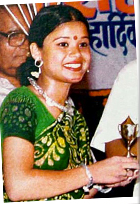
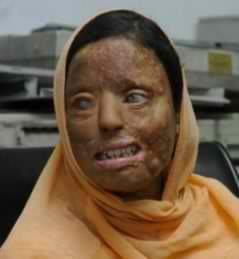
HOPE FOR SONALI


(Sonali before and after her acid attack)
“I want justice, or allow me to end my life," says Sonali Mukherjee.
It has been 9 years since Sonali was victimized by an acid attack by people she knew because of an altercation...her neighbours. The attack left her blind in both eyes, partially deaf and melted away the skin on the skull, neck, chest and back. She was still lucky the acid didn’t enter her brain.
Sonali is now 27 years old, penniless and begging for help from the government or to let her end her life.  She continues to get death threats from her attackers who to this day remain scot-free.  They have now threatened to harm her family as well so Sonali’s family is running from them like fugitives.
Two of the three men (Tapas Mitra, Sanjay Paswan, and Bhrahmadev Hajra) responsible for the attack were convicted and sentenced to 9 years in jail. The youngest was released for being a juvenile. But I can’t find the words to describe my feelings at how the two men convicted were still granted bail by the higher court. Maybe it’s just my poor understanding of Indian Law, but I can understand how deeply disappointed and frustrated the victims feel about the kind of justice system we have in our societies when justice is denied.
Sonali has approached the chief minister of Jharkhand, all the legislators, and MPs, the union women and child development ministry for help and has been assured of help. So far, none have materialized and Sonali and her family continue to run in fear of their safety from people already convicted for their crime.
Though I don’t agree to Sonali asking that she be allowed to kill herself if she is not extended any help, I can understand the desperation and helplessness she feels. The trauma that her situation has brought so much pain not only on herself but her family as well, caused them financial strain, and even endangered their lives, can drive her to the edge.  
A petition to the prime leaders of India to help bring her attackers to justice was launched recently. Hopefully this can help lift Sonali’s spirit to give her hope that justice will prevail and life will always be worth living despite her misfortune.
Sonali is not alone in this fight and she should realize that. Her own struggle for justice can inspire others like her to also speak out and fight such abuses. Many women have been victimized by acid attacks.  Whatever the reason, it does not justify the act and each perpetrator must be brought to justice.
Sources:


Written by Lylin Aguas

Tuesday, 17 July 2012

Another kind of discrimination


The recent two weeks in Colombia, my country, exploded a tremendous scandal because a renowned journalist wrote an article about the advantages of being a fat woman in a very humiliating way, saying things like a fat woman is a big couch-hugging man along side other offensive expressions that maddened as many as 3.000 women who let their anger surface through social media.

It made me think about the kinds of discrimination and how easy it is to offend and hurt people, and also how carefully should we be when we are writers. Unfortunately the journalist had been criticized and treated for the offended women are naive and ignorant and the media that published this article is begging pardon from the Colombian readers.

Suddenly when I was concentrating on the scandal, another journalist known for his critical position about the world, wrote asking why the people in our country were spending energies in this superficial scandal when 417 women died in Colombia in a violent way in the first part of 2012. This quote broke my heart and questioned me because when we live in a country where we hear about death on all days we didn´t stop to think how cruel this reality is and how unfair life is.

That’s the reason why I decided to write this post, because I feel that we need to be the voice of the victimized women who are not here anymore to fight for the end of violence. I want to clarify that I´m not justifying the act of the journalist against fat women, I think it is cruel and also unfair, but I also think that the real reason to protest and be angry is the violence against women.
I should confess that the people in this country sometimes have reaction about this kind of crimes, recently one woman died after being raped and tortured in a park and the people organized a protest, but our fight needs to be stronger and decisive because this kind of abuses cannot continue.


I guess this is a start, but I´m going to look for another ways to contribute to this cause. From now, I expect to start creating conscience about the importance of being worry about the violence against women.

By Claudia Fierro

This is the article to question me about violence:

Tuesday, 3 July 2012

The Gender Pay Gap


The gender pay gap is the difference between the rates women and men are paid for doing the same job. It has been an issue that has been looked at by policy makers ever since women started entering the labour market in large numbers. An organization that has monitored this issue is the Organization for Economic Co-operation and Development (OECD). OECD countries have an average wage gap of 15% with the range of 3.9% to 40%. This means that women salaries range from 60 cents to 96.1 cents for every dollar earned by men with an average of 85 cents. These statistics are based on men and women with similar professional skills, history and education.
Another underlying factor that seems to worsen the situation is the fact that some life events have a direct influence on both men and women’s careers. Women seem to bear the brunt of the impact that marriage and having children has on a career. They get penalised whereas their male counterparts get incentivised up to 2% by employers for the same events.
The labour force has had a lot of change throughout the years. Now women make up almost 50% of the workforce and the majority of these women are the highest income earners in their families or the only breadwinners and others even support more than one family. Surely this more than anything else should prompt policy makers to remedy the situation. There are currently more single income female headed families now than ever before, and it does not look like the situation will improve. Women should therefore earn as much as their male counterparts for doing the same job.
It is recognised all over the world that once you educate a woman, you educate a nation. There has been a huge drive and focus on ensuring that the girl child receives an excellent education and opportunities for growth and success. This is crucial for women empowerment and towards the achievement of the Millennium Developmental Goals. Investing in women and girls will have a powerful impact on the any economy and will create a better world for both men and women. Governments need to take the next step in ensuring that the gender pay gap is eliminated through policies and legislation. Organizations that perpetuate the gender pay gap need to be penalised. And transparency is crucial; employers need to lift the veil of secrecy that surrounds employee salaries. Just as public sector salaries are publicised, the same should apply to the private sector. Governments need to realise that there will be an economic and social cost to allowing the gap to continue.
Life events should not be looked at by employers as just female issues. An overhaul of policies such as maternity and parental leave policies needs to occur. There is also a growing trend of women opting for part-time work or for working in smaller organizations due to them wanting to put their families first. Women should not be forced to make these sacrifices they should have the option of continuing on their career-path without having to cut back. Employers need to find a way of being supportive and accommodating as women often take this time off during their most productive years. This therefore becomes a loss both to the employer and the woman’s career. Therefore policymakers need to be more gender focused in favour of women their policies and legislation.


By Ziyanda Xaso

Sources

Monday, 14 May 2012

SPEAK NO GENDER...EVERYBODY IS THE SAME


When a person belongs to the Dalit or “Untouchable” class, I don’t think there’s really any gender issue to speak of. As far as societies where the caste system continues to be practiced are concerned, the Dalit or “Untouchables” are just that -”untouchables.” And being male or female is of no consequence. Dalits are considered outcastes and not honorable to socialize with or to be amongst them. They are the manual laborers who toil on the streets, work as butchers or garbage cleaners...work not considered “honorable” by the so-called elite in society. But is it not less honorable when one works in a big company but steals from the Company’s assets? Or one working in a private or government post but cheats the stakeholders? But in our materialistic world, “money speaks.” People are often measured by how well they dressed, people they socialize with, how eloquent or articulate they speak, how suave they behave in public, even how “classy” their jobs are.                                                                                                                                                                                                                                                      
I remember my trip to Agra, India. There was a beggar in the train...a gay beggar. He had make-up on, wore a mustard Indian Sari and looked pretty healthy. I thought, “He’s strong enough to work so why is he begging?”  It always irritated me that people strong enough to work go around begging for money. I thought they were taking the easy way out to earn money and I wouldn’t part with my hard-earned money to give someone who’d just ask for it when he was strong enough to earn for himself. Others less fortunate and unable to take care of themselves deserve my help more. My friend gave him some money and explained after my protest, that even if the gay beggar put up a business for himself, no one would really buy from him or get his services because he’s gay and not easily accepted by society. It made me realize that in a society where such people are not given a chance to make their lives better, the road ahead will really be tough, though times are definitely changing in their favor.
And though the Caste System has been outlawed, it continues to be practiced in many countries. The marginalized continue to suffer from the discrimination, still shunned and ostracized by many. There are however, documented stories of Dalit men and women who have made a name for themselves and created their own niche in society. So in this sense, money does talk in circumstances where it becomes a measure of power...power over someone with much less, regardless of one’s caste.  On the other side of it, there are stories of the so-called elite in society who have dared to cross the bridge and associate themselves closely with the Untouchables and the less privileged to give them the recognition they deserve.
Kalpana Saroj’s story, for instance, serves as an inspiration to many Dalit like her. A daughter of a Dalit police constable in Akola district of Maharashtra, she, through her own initiative and perseverance, uplifted her life and is now heading a Rs.3,000 crore business enterprise. She is living proof that one’s caste, class or whatever labelling society may give it, is not a factor when one wants to make his/her life better. She was one of five women entrepreneurs at the first trade fair organised by the Dalit Indian Chamber of Commerce and Industry (DICCI) who “fought not only social prejudices but also gender bias.”  Saroj, along with Geeta Parmar, Aparna Kadam, Sana Ansari and Ishita Lal, had proven that neither being a Dalit nor one’s gender is an obstacle to make their lives better.  (http://www.theweekendleader.com/Success/877/Dalit-prosperity.html)
Saroj’s story wasn’t easy like most Dalit women in India.  She was married off at the age of 12 but  returned  home due to the physical and mental abuses inflicted on her by her in-laws. She tried to join the police, be a nurse and failed. Not giving up, she learned stitching and sewing and made efforts to stitch clothes of her fellow villagers but was met with antagonism by villagers who thought she was “stepping beyond her social boundaries.”  At 22, she married a small-time furniture manufacturer and revived his steel-cupboard manufacture business. It was moving forward from then on.
The Advocacy Project is a social website that ”helps marginalized communities to tell their story, claim their rights and produce social change.” In Nepal, for instance, a group of Dalit journalists provide the e-Bulletin, and live and work in the communities where caste discrimination continues to thrive. The e-Bulletin's network of journalists, help provide these communities find their voice to be heard. What is significant to note is that these journalists, men and women alike, also experience economic hardships because of their being of the Dalit caste. They have less income opportunities and their struggle in reporting stories is made more difficult because of this. The Advocacy Project makes sure their voices are heard.  (http://advocacynet.org/resource/968)
And my favorite story, that of Narayanan Krishnan, one of CNN’s Top 10 2010 Heroes. He left his profitable job as Chef in a 5-Star hotel around 2003 to go home and take care of the less fortunate and marginalized people in his hometown. People considered Untouchables who could not take care of themselves, the mentally challenged, the aged. He broke the chain that put a barrier between Brahmans and Untouchables, risking being outcaste himself by his own family and peers. In his own words, “Food is one part. Love is another part. Brahmans are not supposed to touch these people, hold these people, hug these people, feed these people. I’M JUST A HUMAN BEING. FOR ME EVERYBODY IS THE SAME.”  (http://www.youtube.com/watch?v=ZJZoOGXIXQU&feature=player_embedded)
Naryanan is so right, everybody is the same. So there is no gender, no caste that should ever divide us.


Sources:
The Advocacy Project
CNN Tribute to Narayan Krishnan

The Weekend Leader


By Lylin Aguas

Thursday, 3 May 2012

The suffering and defiance of Dalit women


There are about 167million Dalits also known as untouchables in India of which 49.96% are women. Dalits, especially Dalit women face immense economic, social and educational deprivation. Their jobs provide hardly enough income to fund their kids’ education and feed their own families, thus reproducing the cycle of impoverishment. The Indian government has tried to eradicate this systematic discrimination by way of stipulating in the constitution that all forms of discrimination based on caste must be abolished. The constitution was adopted in 1949.  

According to the International Dalit Solidarity Network (IDSN), Dalit women suffer multiple discrimination: “first as Dalit’s, second as an impoverished underclass and third as women”

Dalit women have been systematically raped, forced to parade naked and have endured sickening accounts of sexual assault. Specific forms of violations have been forced prostitution where thousands of Dalit girls are pressurized into prostitution every year, or born into the trade. The second form of extreme violation against Dalit women is manual scavenging. Mostly Dalit women earn their living through this degrading form of labour. Manual scavenging signifies the removal of human feces. The human feces are usually removed by use of simple methods, put into buckets and then carried on their heads. These women, who are subjected to such jobs, earn very little and often become ill due to the unhygienic nature of their work. Most depressing is the stigma tied to this job, leaving the majority of these women unable to seek another means of living, if they choose to do so (IDSN).  

 Unearthing what lies behind this  vile treatment of Dalit women is found in Hindu religious books, particularly  the  Manusmriti,” women have no right to education, independence, or wealth (n.pag)” Even the killing of a dalit woman is purely acceptable as a  small offence for the Brahmins: equivalent to the killing of an animal (Manusmitri)” (Report : Unheard voices-DALIT WOMEN).

Stigma and religion have prevented many Dalit women in building a better future for themselves. On the other hand there are some who are stepping out to challenge the establishment and raise their voices. Many Dalit women have been mobilized in demanding their rights for dignity and security in the form of land rights.
Securing land rights entails enabling these women to become substance farmers thereby growing their own crops and thus providing a staple diet for the entire family. Becoming substance farmers would allow them to save money, which they can use to send their children to school. Securing land rights would also help the husbands of Dalit women stay with their wives. Many Dalit men leave their poor families in search of work.

Some Dalit women have taken the fight for dignity and security further by becoming successful politicians and millionaires.
Discrimination against Dalit women still continue on a large scale. Nonetheless there are stories of hope and defiance.  Let’s hope that these stories increase.  


By Charlotte Lazarus

Saturday, 24 March 2012

To Kill, to protect Honour?


Jamila was to be married off to a cousin, but she couldn’t stand the idea, not one bit. The proclivity for her family to force on her an incestuous bond in matrimony was far too much for her to accept, far too wrong for her to tolerate. Jamila was educated, even if not as much as her brother was- she still understood the wrong in allowing the marriage to take place. Jamila’s heart was with another, anyway, and marrying him was the only prospect she was willing to consider. So she devised a plan- she would run away on the eve of the wedding. A trusted friend would be her aide, and help her escape the pockmarked fate that was awaiting her. But even the truest of friends can be forced to turn foe, circumstances forcing her to be a tattle-tale. That night, Jamila was killed by her brothers.
Why?
Because the family’s honour is of utmost importance; Because a runaway bride is a prospect about a thousand times worse in comparison to a dead one; Because they can.
Jamila is a wispy piece of fiction for my article. But her fate is not. In the past year alone, as many as 943 Pakistani women were killed, all in the name of honour. They allegedly shamed their family, and by bringing their family disrepute, death was their decided punishment. The Human Rights Commission of Pakistan, in its report, exposed the sordid reality shrouding the sudden deaths of these many women. 93 of these women were minors. In as many as 595 cases, the reason was the subsistence of alleged illicit relationships, while as many as 219 women had voiced a demand to marry a person of their own choice. The report reveals the dark horrors of unabashed antagonism to women- as many as 180 cases had their own brothers as the killers, 226 cases where husbands as the killers, and 19 of them were raped, while 12 were gang-raped.
But what is the honour in killing?
How could these men justify the killing of their women, all in the name of “honour”? I remember these lines I read in Shakespeare’s magnum opus, Julius Caesar, where Brutus says to Cassius,
Set honour in one eye and death i' the other,
And I will look on both indifferently,
For let the gods so speed me as I love
The name of honour more than I fear death.
As contextually logical as these lines appear vis-a-vis Brutus’ exchange with Cassius on the subject of Brutus’ affection for a sense of honour, rather than to live a life with stigma, the insinuation of such logic in the hope of quelling any plausible dishonour stemming from a woman’s choice of standing for herself, or from a woman’s pursuit of a relationship with a man of her choice, is absurd. Outrageously so, at that.

Honour killings are a reflection of a society that is steeped in an uber-conservative mindset, and deeply entwined an ego-centric misunderstanding, wherein women are construed emblematic of their familial honour, through their behaviour and conduct in the public eye. Any ‘misconduct’ therefore, is a depredation of the family’s honour and pride, and needs to be prevented at any cost. The dishonour can be dispensed with, and honour can be restored only if the offending female is tossed off the cliff.
But this mindset is not confined to Pakistan. Palestine, Afghanistan, and even the west- wherein Canada’s records show the occurrence of the ‘honour’ killings of a couple of girls, to name a few, are hotbeds where the practice seems to thrive.
There is no doubt that a mentality that precedes the perpetration of such an act is a product of misguided and ill-gotten values. Reality is theirs to interpret - it appears, for they seem to liberally take the law into their own hands. The confluence of a politically liberal environment coupled with misinterpretation of religious texts as sanctioning the act by a couple of zealots is an unholy, heady mix. You cannot hope to be politically or religiously liberated if you fail to understand that social liberation goes alongside the both.
Honour lies in respect, in perseverance, in honesty and in humanitarian conduct. And when you kill, there’s no more dishonour than that.


By Kirthi Gita Jayakumar

Tuesday, 24 January 2012

Women have Dreams too!

I’ve been away from London for about 3 weeks to visit my homeland Nigeria. I had so much fun that I actually cried at the Murtala Mohammed Airport in Nigeria (drama queen behaviour haha). Anyways hope everyone is okay! During my stay I had the opportunity to visit a village called Akpugo in the eastern part of Nigeria, where I met some of the loveliest people. However, one of the main things I discovered from interacting with many of the women in Akpugo was the general preference for men to be engaged in higher education and skilled labour.

For the young girls in developing countries, school might be an option for a few years, but most girls are pulled out at the age of 9 or 10 when they're useful enough to work all day at home. Nine million more girls than boys miss out on school every year, according to UNICEF. While their brothers continue to go to school or pursue their hobbies and play, they join the women to do the bulk of the housework.

Housework in developing countries consists of continuous, difficult physical labour. A girl is likely to work from before daybreak until the light drains away. She walks barefoot long distances several times a day carrying heavy buckets of water, most likely polluted, just to keep her family alive. She cleans, grinds corn, gathers fuel, tends to the fields, bathes her younger siblings, and prepares meals until she sits down to her own after all the men in the family have eaten. Most families can't afford modern appliances, so her tasks must be done by hand—crushing corn into meal with heavy rocks, scrubbing laundry against rough stones, kneading bread and cooking gruel over a blistering open fire. There is no time left in the day to learn to read and write or to play with friends. She collapses exhausted each night, ready to wake up the next morning to start another long workday.

Most of this labour is performed without recognition or reward. UN statistics show that although women produce half the world's food, they own only 1 per cent of its farmland. In most African and Asian countries, women's work isn't even considered real labour. Should a woman take a job, she is expected to keep up all her responsibilities at home in addition to her new ones, with no extra help. Women's labour goes overlooked, even though it is crucial to the survival of each family.


Women and Men are equal and women should never be treated as second class. Women have rights, dreams and aspirations! We cannot continue to overlook the way in which poorer women are being classified and undermined around the world we live in!

Monday, 2 January 2012

The role of religion

Katherine R. Vasquez Tarazona

“(No matter what) never discuss politics, religion or any other upsetting matter on the table.” This is quite a popular saying in many cultures and it has its grounding. Politics and religion are topics that may bring the best and worse from us. Whatever argumentation, no one is ready to give an inch on their belief system. Yet, I have disappointed good manners many times. My huge craving for understanding and further knowledge has led the path to very impolite meals, which fortunately never ended on fights (of any kind). I guess, respect was the main ingredient served during those gatherings.

I have to warn you about the content of this post. I am aware I might raise controversy by discussing one of those forbidden topics. Nevertheless, just like in Economics and Law we discuss the role of the State in society; I believe that in society we must discuss the role of religion on their communities.

2011 left us with a bittersweet flavor on the mouth. True, I have been inspired, moved, and proud. Nonetheless, I have also been disgusted, sadden, and ashamed. One of the reasons for me to react with such strong and dark feelings has been originated in churches or under their names (do please note, I am not addressing one’s religion as such).

Back in November, I heard a lot about Aliaa Elmahdy (20). She’s Egyptian and a blogger. If the name does not tell you much, maybe you will remembered her better when I tell you she was the girl who decided to publish some nude self-portrait photos as a protest to her country’s regime. She calls herself an atheist and claims that the pictures she showed are her revolutionary way to change sexism in her country. Because of them, she has to face the Egyptian justice, yet to decide under which charges. I spent some time on one of her blogs. She is without any doubt very strong on her opinions and helps others, with similar struggles, to expose their voice. Whether you agree or not with her modus operandi, I am sure you concur with freedom of speech and respect. I read most of the menaces that she got and they are quite disturbing. I was even more surprised when I found out that she has been somehow rejected in Tahir square by the protesters, calling her and her boyfriend names and asking them to leave or separate because of their improper manners  (such as having her arm on his shoulder or sharing the same tent).

Shortly after the blogger’s photos went viral, a friend of mine wrote about her and proposed an interesting question: if Aliaa is an atheist why does she have to be judged under the sharia law? Being an attorney myself, I gave her my “legal” opinion about it but, as a community member, I would lie to you if I tell you I felt comfortable with it.

In early December, a report was given to the high-level advisory group in Saudi Arabia stating that allowing women to drive will encourage premarital sex and, therefore, threaten the country’s tradition of virgin brides. (Yes, there is a correlation there and yes, it is also escaping me). Manal al-Sharif (32) was arrested in May, after she posted on youtube a video of herself driving. She spent nine days in jail and was only freed when she agreed to quit the “Women2Drive” campaign (of which, she was a key organizer). On her pledge she said she voluntarily had decided to leave the cause and that she was in deep gratitude to the King for ordering her release. The campaign’s facebook page has not had any activity since June, 1st.

In even more unsettling news, I read that women with attractive eyes may now have to cover them up, if the resolution is passed in Saudi Arabia. The measure is due to prevent women to provoke men through their beautiful regards. Apparently, men lack of self control and it is the women obligation to prevent them from any improper thought. Saudi Arabia’s “committee for the promotion of virtue and the prevention of vice” deals with cases like this. At this point, I was certain I had heard it all but oh, I was wrong! Thanks to one of my dearest friend I came across the news of an Islamic cleric based in Europe “banning” women from touching vegetables or fruits that could have any sexual resemblance to male genitalia.

At last but not least, let me add to this list this statement: “Gay pride parades resemble KKK marches” –said by Cardinal Francis George, Archbishop of Chicago, USA. I might be losing my comparison’s skills. For those unfamiliar with the Ku Klux Clan, is enough to say that this was a radical movement born in the States in the 60’s and tried to defend white supremacy, “white-nationalism” and eradicate immigration through terror mechanisms. How does this resemble the gay pride parade? According to the Cardinal, the analogy was perfect because they both hate Catholic Church. I am not familiar with stats on the subject, if anyone has run them, but I am pretty sure that most of my homosexual friends are far from hating religion. In fact, their desire to get married is found on their catholic believes. I am sorry Cardinal; the resemblance is quite blurry to me.

Religion should not promote anger statements or reactions against those who do not share their views or believes. This is fundamental to me, may it be call tolerance or just common sense. In Israel, a little girl, Namaa (8), was called a prostitute and spit on by ultra-Orthodox men on her way to school just because her dress did not adhere exactly to their rigorous dress-code. Take a second to realize that a child was bullied, embarrassed and frighten by adult men on her way to school. How is it possible to defend such acts on the name of any religion?

Extremists usually say that women are treated poorly because of their transformation into sexual objects. I agree with that. It is both sad and frustrating to see how some women are portrayed as mere objects but I also found unbearable to observe how some [women] are emptied from all their rights and put under the obligation of taking care on men’s mind, preventing them from sin. In most common ultra conservative societies, women are exposed to harassment and dishonor in a greater proportion than in other.  When one of my friends moved to Cairo, she said she had to be very careful because men will grab her behind (without consent) anytime. When I went to Morocco, a bunch of guys were walking next to me asking me about the origins of my “pretty face”. Back at home, I cannot wear short pants and pretend not to hear men expressions about it. All of these are examples of sexism and have no correlation with religion, none. However, when religion leaders find their way through words to create those fictional links, people tend to defend them as their own and commit unspeakable acts, such as the ones that Namma went through.

Religion is very strong in some communities. They gather people with similar views of life and they defend those from others. I get that, and I respect it. I do not mind seeing someone with a veil (when it’s by their own choice) or with a cross on their hand[i]. It bothers me to see them attempt against human rights, in a passive-aggressive mode or just in a very aggressive way. How is anyone who asks for someone’s death any different from a terrorist or a murderer? Let me step back for a second here. I do not mean that anyone with a spiritual belief is on danger of becoming a hater nor to be brainwashed. I denote that a person, who is filled with anger and cannot respect a human being for what she/he is worth (life), should not use religion as a mean for rage transference. 

What is the role of religion in their communities? To my modest understanding, promote love and respect for life, in spite of one’s beliefs and ways of conduct. Easier said than done, yes; but trying is significant. Religion should not become a channel or a pillar to hinder humanity. If anything, it should be a bridge that brings together, equally, men and women. And maybe, with some luck religion will inspire understanding and serve as an open channel for communication. I have might gotten all it wrong, since I am not a very spiritual person myself; however, I think it is worth the debate.


[i]      I do not want to start the debate on some European legislation on the subject but I have it in mind while writing this sentence.